A keynote changes a room for ninety minutes. Consulting changes the systems people come back to on Monday. Different work, different outcome, different commitment.
Consulting, for me, is ongoing, but the goal is never dependency. I build capacity, not a standing appointment.
I help companies weave mental health into their culture. Not as a poster in the break room or an annual training. As language leaders use, as conversations that happen in performance reviews, hiring, and the moments no one prepares for. The work looks different every engagement.
When trust breaks after a hard quarter. A leadership team that stopped communicating honestly and started managing around each other. I get into what people actually say to each other and what they don't, and rebuild the conversations that hold a team together.
When an org chart changes overnight. Mergers, acquisitions, restructures. The org chart changes but the nervous systems underneath it don't. I walk people through the human side of transitions that no one built a playbook for.
When your team is avoiding the hard conversation. The thing everyone knows but no one wants to name. I sit in those rooms and help people say the real thing, so the culture stops working around the problem and starts working through it.
It all comes back to relationships. That's where culture actually lives.
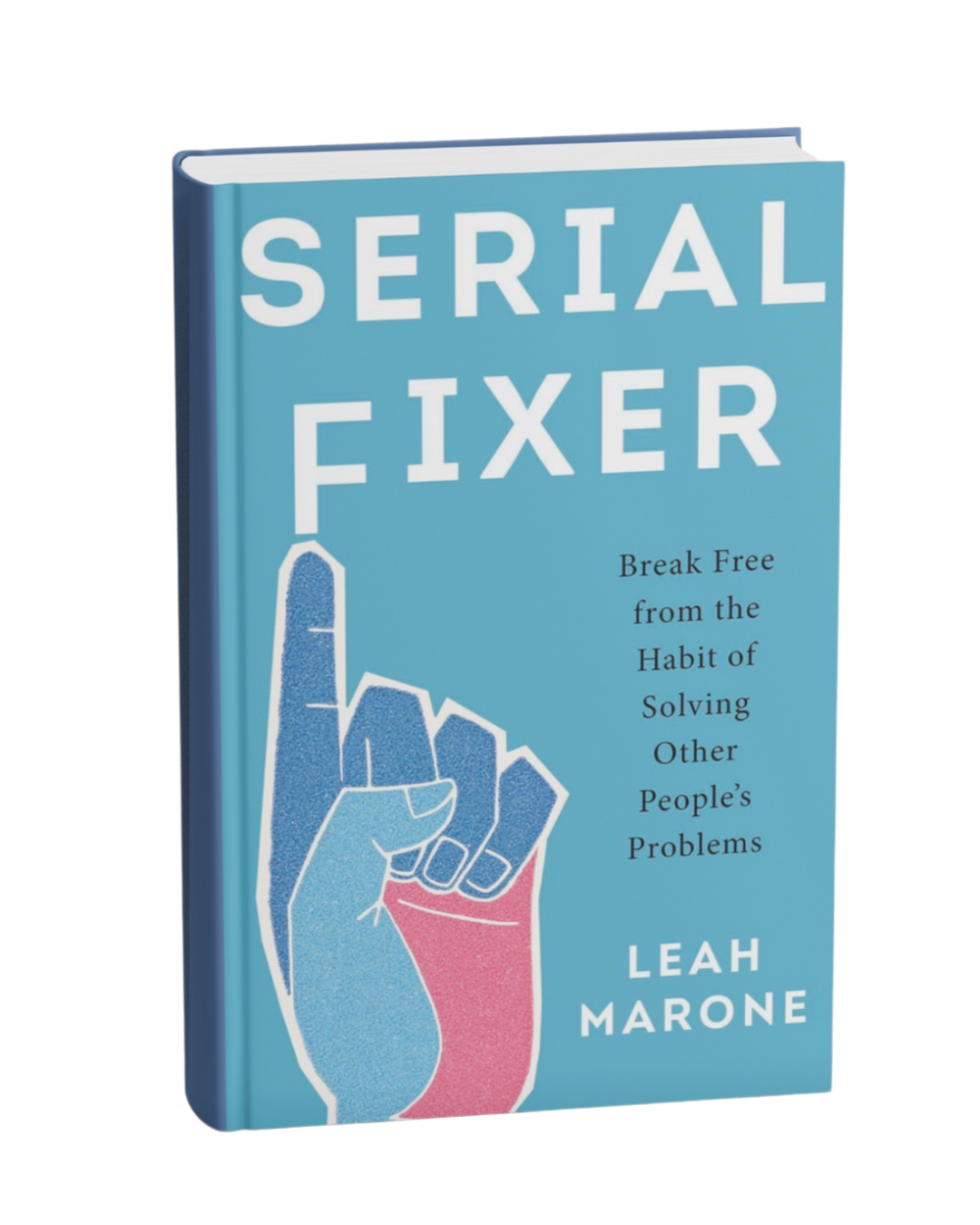
Teams are using Serial Fixer as the backbone of their book study. Leadership cohorts, sales teams, educators, and people-facing groups where over-functioning has quietly become the culture. The book does the teaching. I show up live for the conversations that matter.
We work through the internal conflicts and learn how to identify and understand our different parts and the roles the InnerCritic, InnerPleaser, and InnerRescuer play. Instead of shoving them down or distracting our way around them, we build self-awareness and self-alliance. We get curious about what each part is motivated by and trying to protect us from.
Only then can we build internal boundaries. And only then do external boundaries actually hold.
From there we move into the Support, don't Solve framework. You still lead with empathy and compassion, but you stop taking ownership of problems that aren't yours. You empower others to get their reps in while you stay present to support, not structure, fix, and plan your way through everything. That's exhausting, it fuels imbalance, and it keeps you out of the equation entirely.

Three to six sessions with the same cohort. For leadership teams, managers, or specialized groups like HR and clinical staff.
Ongoing counsel to senior leaders and people teams. Quarterly check-ins, crisis response, program review.
A program designed around your actual problem, not an off-the-shelf deck relabeled with your logo.
C-suite leaders navigating boundaries, burnout, and personal sustainability while carrying the weight of an entire organization.
Building systems that hold staff without HR itself becoming an unpaid therapy bench for the entire organization.
Mission-driven teams running on fumes. Work that protects the mission by protecting the people carrying it.
I read every inquiry myself. Tell me the actual situation, not the sanitized version.